Packaging is often the first physical contact a shopper has with a ride-on toy. It also has to survive stacking, handling and a long ocean journey. A good OEM brief therefore covers both shelf appearance and transport reality.
Choose the right level of change
Private-label cartons, logo stickers and colour changes are usually quicker than a new body mold. Tell the factory which parts must change and which can remain standard. Our OEM / ODM range is a useful starting point for that conversation.
Prepare production-ready artwork
Send vector logos, barcode data, warning text and the language versions required for your market. Keep the SKU and voltage visible on the carton so warehouse teams can identify cartons without opening them.
Design for the container
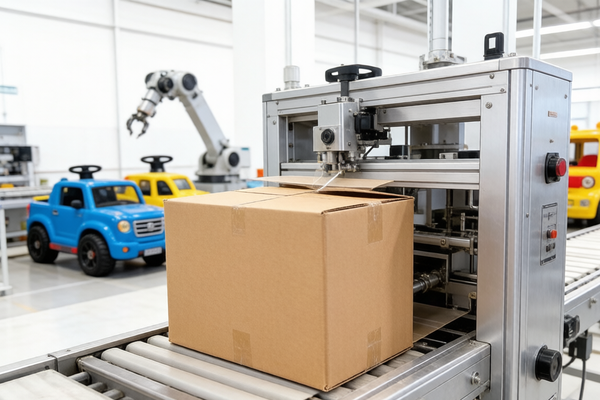
Carton dimensions affect loading efficiency, pallet decisions and damage risk. Ask for a packing sample or dieline before printing a large batch. We review artwork alongside carton strength, internal protection and loading logic.
Confirm compliance by configuration
Packaging claims, manuals and documents must match the actual product. Before printing, ask what can be supplied for the selected SKU and destination; the certification guide explains our model-specific approach. Send the brief through Contact for a feasibility review.
Separate standard packaging from OEM changes
Before asking a China ride-on toy factory for private-label packaging, divide the brief into required changes and optional improvements. A logo, carton artwork or language manual may be handled differently from a new colour, accessory set or body change. The OEM/ODM range is the right place to begin the discussion, but feasibility is confirmed by SKU, quantity and market.
Packaging information the factory needs
- Target product SKU, voltage and battery configuration
- Brand logo in an editable or vector format
- Carton dimensions, barcode, warning text and destination language
- Manual, charger and accessory requirements
- Expected order quantity and whether the order is standard, private-label or mixed
- Destination market and required compliance wording
Do not approve artwork before the product configuration is fixed. The carton, manual, labels and certificate references must describe the same model. Review the Certification guidance and ask for the applicable document scope before printing.
Packaging approval workflow
- Send the model and brand brief.
- Confirm the feasible changes and order assumptions.
- Review artwork, warning text and barcode placement.
- Check a sample or packing proof.
- Approve the final version in writing before mass production.
- Confirm carton count, loading plan and shipment documents.
Send the packaging brief, target market and estimated quantity through Contact. This gives the factory enough context to discuss OEM/ODM, MOQ, packing and loading together.
FAQ for OEM buyers
Can the factory change every part of a ride-on toy?
Not every change is suitable for every SKU. Colour, logo, carton and manual changes may follow a different process from tooling or electrical changes. The factory must review the exact project before confirming feasibility.
What should be confirmed before printing cartons?
Confirm the SKU, voltage, battery, accessories, warning text, destination language, document scope and final packing method. Avoid printing claims that have not been verified for the shipped configuration.